
STAY UP TO DATE WITH ART IDEAS
Our News
How Art Helps Children Grow?

Lessons from Europe’s Most Inspiring Children's Art Studios
As I continue exploring children's art studios in France and across Europe, one question appears again and again:
How does art help to a child grow?
Today's parents are looking for much more than entertainment after school. They are searching for meaningful enrichment opportunities that help children develop creativity, confidence, self-expression, observation skills, and critical thinking. Many of Europe's most respected children's art programs are built around these goals.
Art Is About More Than Making Beautiful Pictures
One of the most interesting discoveries I made while studying European art studios is that many of them place less emphasis on creating a "perfect" artwork and more emphasis on the creative process itself.
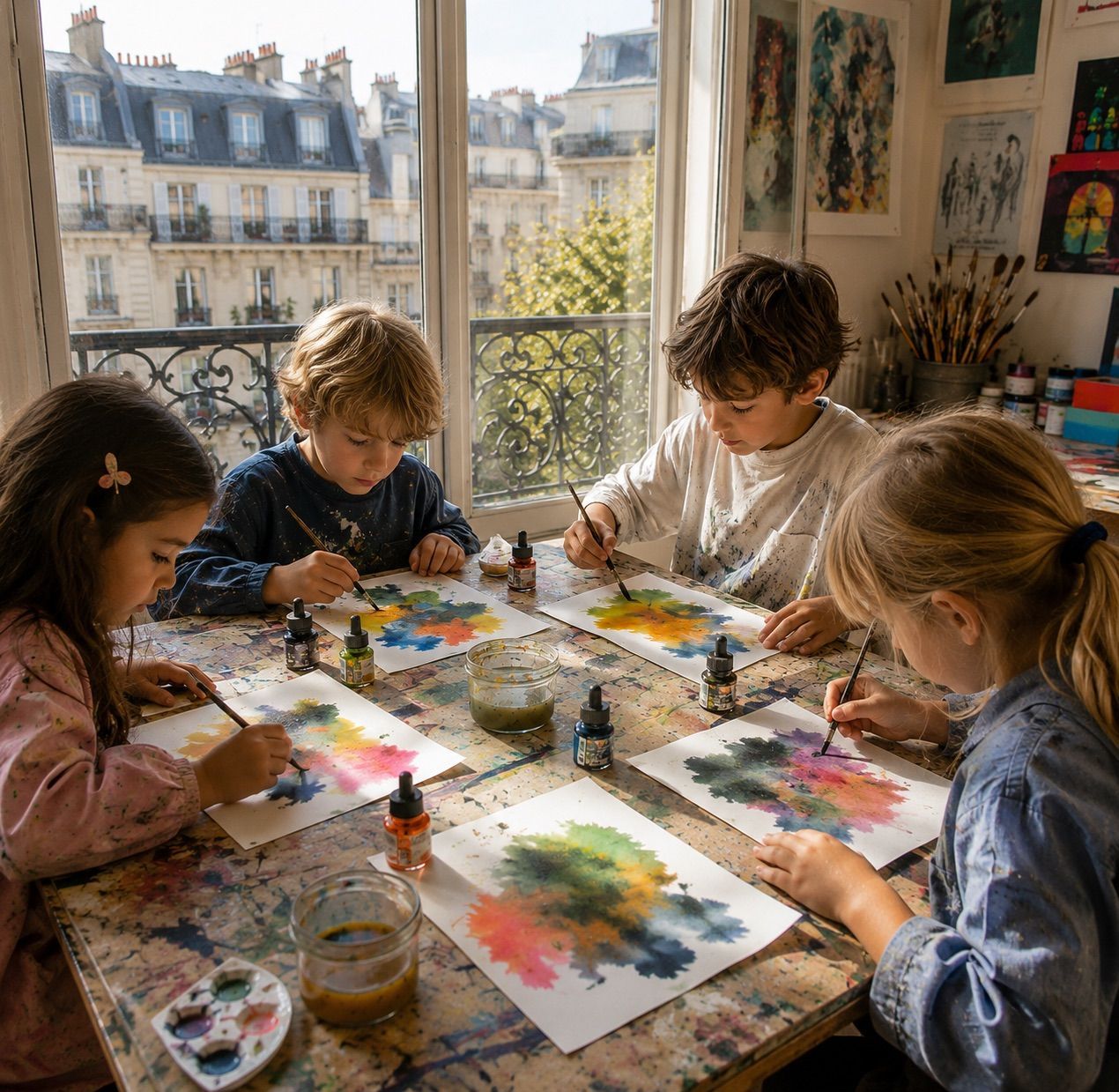
For example, several children’s art studios in France encourage students to experiment freely with watercolor, collage, textures, and mixed media rather than simply copy the teacher’s example step by step. In many classes, children are invited to interpret famous artists in their own unique way, make independent creative decisions, and explore materials without fear of making mistakes.
This approach helps children become more confident, imaginative, and emotionally expressive while developing a genuine love for creativity and art.
Children are encouraged to:
- observe carefully
- experiment freely
- ask questions
- solve creative challenges
- express their own ideas
This approach helps children become independent thinkers while developing artistic skills. Many studios describe creativity as a tool for building confidence, resilience, and self-discovery.
Confidence Through Creativity
A recent study found that 92% of children believe creativity helps boost their confidence. Experts explain that creative activities allow children to recognize their unique talents, trust their ideas, and develop a stronger belief in their abilities.
When children make artistic decisions on their own, they learn that there is often more than one right answer. This builds confidence that extends far beyond the art studio.
Many European art educators consider confidence-building to be just as important as learning artistic techniques.
Learning to Think Creatively
Several leading European studios focus on experimentation rather than copying. Children explore a wide variety of materials including watercolor, painting, sculpture, collage, printmaking, photography, and mixed media.
Instead of asking every child to produce the same result, teachers encourage individual interpretation and problem-solving.
This helps children develop:
- creative thinking
- decision-making skills
- flexibility
- imagination
- perseverance
These are valuable life skills that support learning in many areas beyond art.
A Screen-Free Space for Self-Expression
In today's digital world, many parents are actively seeking activities that encourage children to slow down and engage with the physical world.
Art provides a rare opportunity for children to:
- work with their hands
- focus their attention
- express emotions
- communicate visually
- enjoy a calm creative environment
Many modern European studios describe their classrooms as nurturing spaces where children feel comfortable exploring ideas and expressing themselves without fear of making mistakes.
What I Love About European Art Education Approach
What I especially appreciate about many European children's art programs is how closely they align with my own teaching philosophy.
I believe children thrive in an atmosphere that feels relaxed, thoughtful, inspiring, and nurturing.
Art classes should not only teach techniques. They should also help children develop:
- concentration
- patience
- creative problem-solving
- emotional self-expression
- confidence in their own ideas
These values resonate deeply with me and continue to influence the way I teach at Art Point Studio.
Bringing European Teaching Methods Ideas to Art Point Studio
Perhaps the most beautiful idea I discovered in many European children’s art studios is that art is treated not simply as a class, but as a meaningful part of childhood itself.
Children are encouraged to observe the world more carefully, notice beauty in everyday life, express emotions visually, and trust their imagination. The atmosphere often feels more like a creative atelier than a traditional classroom.
I believe this kind of artistic experience can stay with a child for many years — helping them become not only stronger young artists, but also more thoughtful, expressive, observant, and confident individuals.
This is exactly the kind of creative environment I hope to continue developing at Art Point Studio in Naples.
In my studio, students stand by large shared tables during art class, move freely around the studio, observe each other’s work, and feel relaxed and independent while creating. This freedom of movement creates a more natural, inspiring, and creative environment for children.
For parents, art enrichment today is becoming much more than an after-school activity. It is an opportunity to give children a healthier balance in modern life — a space away from screens where they can slow down, focus, create with their hands, develop confidence, and experience the joy of imagination in a warm and supportive environment.